
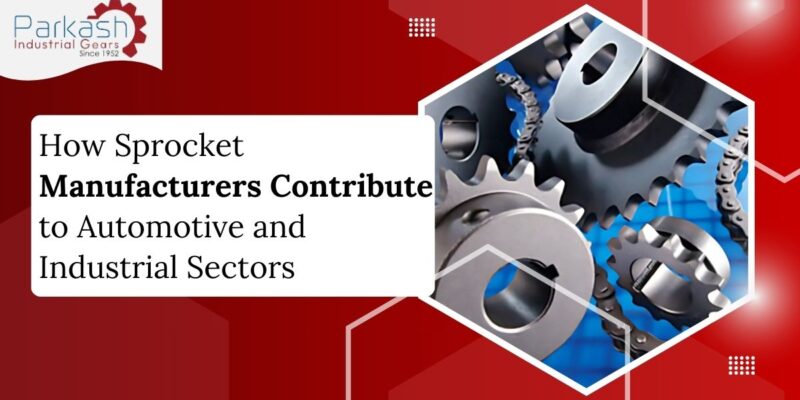
How Sprocket Manufacturers Contribute to Automotive and Industrial Sectors
A Sprocket Manufacturers plays a fundamental role in the modern world, creating the toothed wheels that are at the heart of countless machines and systems. These manufacturers design and produce sprockets, which transmit motion and power using a chain, belt, or track. While sprockets are often confused with gears, they are different because they do not mesh directly with another sprocket but rather with a chain or a similar component. This unique function makes them indispensable in both the automotive and industrial sectors.
Contribution to the Automotive Sector
Sprockets are the unsung heroes of the automotive industry. They are fundamental to a vehicle’s performance and reliability, working quietly within critical systems to ensure smooth operation.
Engine and Transmission Systems
One of the most vital uses of sprockets is in a vehicle’s timing system. A timing chain, which is essentially a heavy-duty bicycle chain, connects the crankshaft and camshaft sprockets. As the engine runs, these sprockets ensure that the valves open and close at the perfect time, in sync with the pistons. This precise timing is crucial for a smooth and efficient engine.
Sprocket manufacturer create these specialized components with incredible accuracy, as even a slight misalignment can lead to major engine damage. They use high-strength materials like hardened steel to ensure the sprockets can withstand the immense stress and heat of an engine.
In motorcycles, sprockets play an even more visible role. The drive sprocket (front) and the driven sprocket (rear) are connected by a chain. By changing the size of these sprockets, a rider can adjust the bike’s performance. A larger rear sprocket provides more torque, which is great for acceleration, while a smaller one increases top speed. This is a classic example of how sprocket design directly impacts a product’s function.
Other Automotive Applications
Beyond the engine, sprockets are also found in other areas of a vehicle.
- Steering Mechanisms: In some power steering systems, sprockets and chains are used to assist in turning the wheels.
- Power Windows and Seats: Small-scale sprockets and chains are used in the motors that operate power windows and adjustable seats, providing smooth and controlled movement.
- All-Wheel Drive Systems: In some all-wheel-drive or four-wheel-drive vehicles, sprockets are used within the transfer case to distribute power to all four wheels.
Sprocket manufacturers contribute to the automotive industry by providing high-quality, durable components that are essential for a vehicle’s function, safety, and efficiency.
Contribution to the Industrial Sector
The industrial sector is where sprockets truly shine, acting as the backbone of automated manufacturing and heavy machinery. Their ability to transmit power reliably and efficiently makes them a cornerstone of industrial operations.
Conveyor Systems and Assembly Lines
Nearly every manufacturing plant, warehouse, or logistics center relies on conveyor systems to move products from one point to another. Sprocket manufacturers produce the large, heavy-duty sprockets that drive these conveyor belts. These components must be extremely durable and reliable to handle constant use and heavy loads. The precision of these sprockets ensures that the conveyor moves smoothly, preventing jams and ensuring a consistent flow of goods.
Heavy Machinery and Equipment
From massive construction equipment to mining machinery, sprockets are a critical part of the power transmission system.
- Construction: Bulldozers, excavators, and cranes all use large sprockets with tracks to move and operate. These sprockets are engineered to withstand extreme conditions, including dirt, mud, and heavy loads.
- Agriculture: Tractors, combines, and other farm equipment rely on sprockets for various functions, such as operating conveyor belts that move crops or powering internal mechanisms.
- Material Handling: In factories and ports, sprockets are used in material handling equipment like forklifts and hoisting systems to lift and move heavy objects.
Industrial Automation and Robotics
As industries move towards more automation, the demand for high-precision sprockets has grown. Sprockets are used in robotic arms and other automated systems to translate rotational motion into the precise, controlled movements needed for intricate tasks like assembly, welding, and packaging. The accuracy of these sprockets is vital for the robots to perform their jobs flawlessly.
Specialized Sprockets
Sprocket manufacturers don’t just make one type of product. They create a wide range of specialized sprockets to meet the unique needs of different industries.
- Plain Bore Sprockets: Simple and effective for low-speed applications.
- Taper Lock Sprockets: Designed for easy installation and removal, ideal for heavy-duty applications where maintenance is frequent.
- Idler Sprockets: Used to guide the chain and maintain proper tension, preventing slack and ensuring smooth operation.
- Double Single Sprockets: Used to drive two separate chains simultaneously, which is common in packaging and food processing lines.
Sprocket Manufacturing in India
India has a thriving manufacturing sector, and gears manufacturers in India play a significant role in both the domestic and international markets. These companies, including specialized sprocket gear manufacturer, are known for their expertise in precision engineering.
Many Gear manufacturing companies in India produce a wide range of products, from simple sprockets for agricultural machines to complex, high-precision gears for the automotive and aerospace industries. They often use advanced technologies and materials to meet global quality standards. The growth of this industry in India is a key indicator of the country’s rising industrial strength and its ability to support critical sectors with high-quality, reliable components.
The Manufacturing Process
Creating a sprocket is a complex process that combines traditional craftsmanship with modern technology. It starts with selecting the right material, typically high-grade steel, cast iron, or sometimes even special plastics for lighter applications.
The most common manufacturing methods include:
- Machining: Using computer-controlled machines to precisely cut the teeth and shape the sprocket from a solid block of material.
- Forging: Heating metal and shaping it with a hammer or press to create a strong, durable sprocket blank.
- Powder Metallurgy: Compressing metal powders into the desired shape and then heating them to fuse the particles together. This method reduces waste and is great for making complex shapes.
- Heat Treatment: After shaping, the sprockets are often heat-treated to make the teeth harder and more wear-resistant.
The final product is then meticulously inspected to ensure it meets strict quality standards, with every tooth and dimension checked for accuracy. This attention to detail is what makes a high-quality sprocket a reliable and long-lasting component, ready to power the world’s machines.
 FSC India.

This Post Has 0 Comments